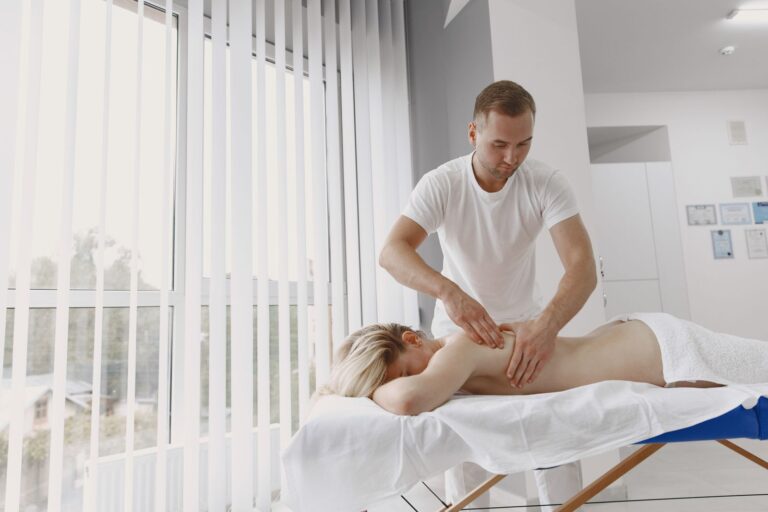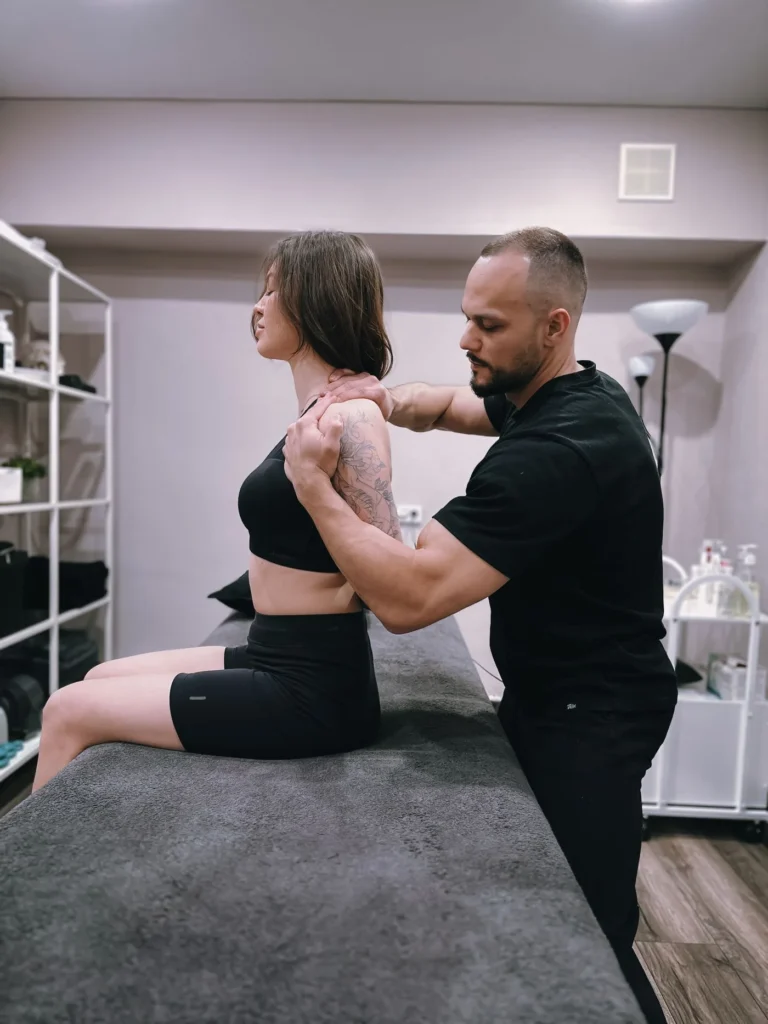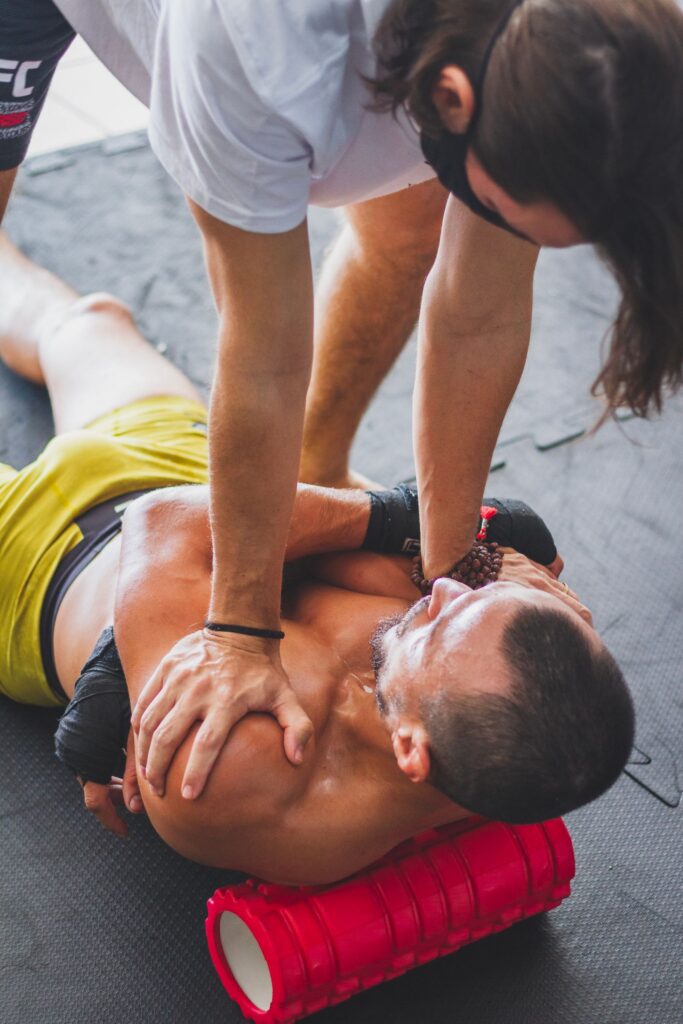
“Is it worth getting a massage, or should I buy a foam roller and do self-massage at home?” We hear this question every week. The short answer: it depends on what you want to achieve. Self-massage is excellent for daily maintenance, mobility and muscle soreness after training. Massage from a therapist is better for pain that won’t go away, specific problem areas, and when you want deep relaxation.
The best results usually come from combining the two: the therapist solves the problem and shows you how to maintain the result at home. Below you’ll see what the research shows and what to choose when.
Contents
Foam rolling and massage balls: what the research shows
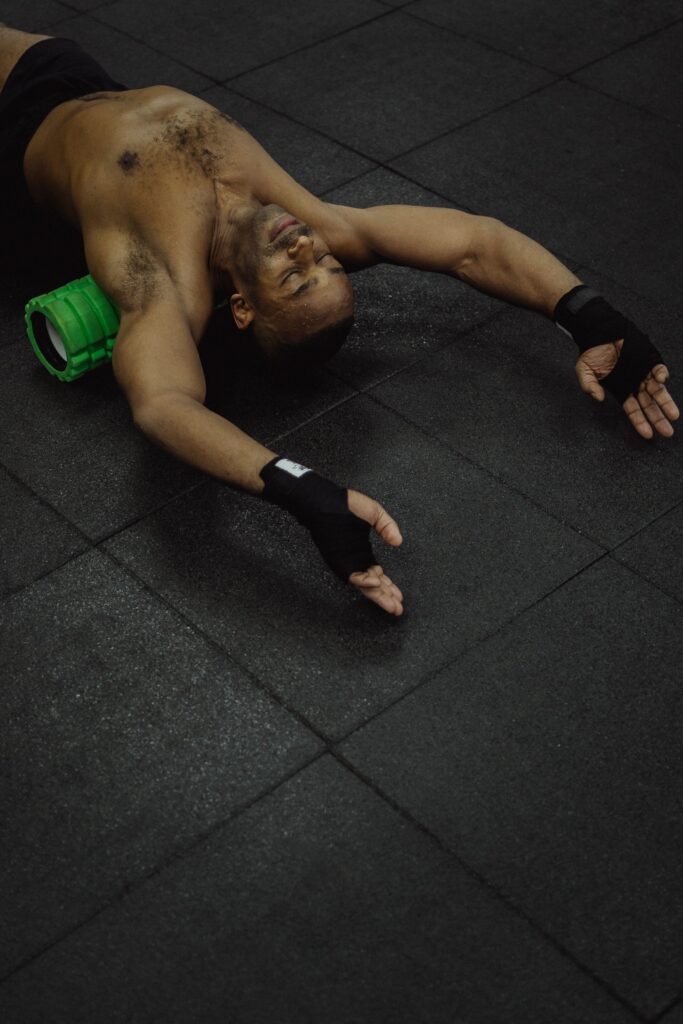
Foam rolling is one of the most studied recovery tools. The conclusions are fairly clear:
- Mobility – yes. A meta-analysis of 32 studies found a large effect on range of motion – foam rolling increased it in every included study (Skinner et al., 2020). With regular use over weeks, the effect is comparable to static stretching (Konrad et al., Sports Medicine, 2024).
- Muscle soreness – yes. Self-massage reduces perceived muscle pain after exercise (Wiewelhove et al., 2019). A 2025 study found that foam rolling normalised muscle tone, stiffness and elasticity after training better than a massage gun (PMC, 2025).
- Strength and performance – weak. A foam roller doesn’t make muscles stronger. Effects on sprinting, jumping and strength are small and better suited to warm-up than recovery (Wiewelhove et al., 2019).
- Safety – high. Used correctly, self-massage does not cause harm (Skinner et al., 2020).
Massage from a therapist: what the research shows
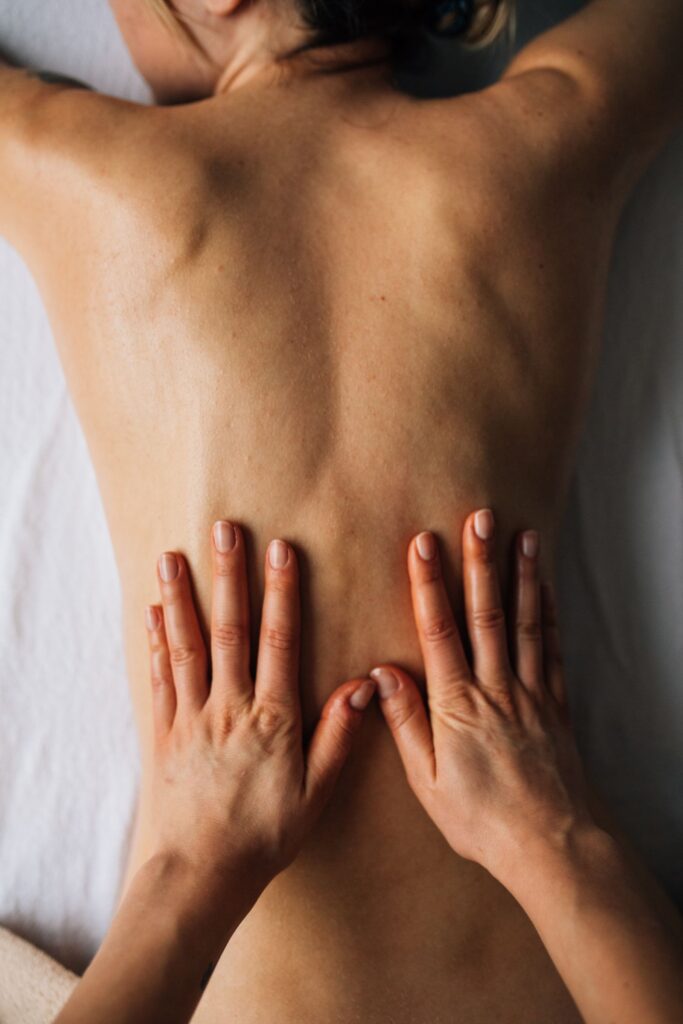
Massage has been studied mostly for pain – in the low back, neck and shoulders, and in fibromyalgia and myofascial pain.
- A large review in JAMA Network Open (2024) summarised all systematic reviews from 2018 to 2023. Massage showed potential benefit for low back, neck and shoulder pain, fibromyalgia and myofascial pain. For chronic low back pain, fibromyalgia and myofascial pain the evidence is now of moderate certainty – stronger than before (Mak et al., 2024).
- The effect is mostly short-term. In chronic low back pain, massage relieves pain over the following weeks, but not in the long run if it’s the only treatment (Mak et al., 2024).
- For neck pain, the 2024 Cochrane review (33 studies) found a small effect with low-certainty evidence (Gross et al., 2024).
- Relaxation. A comparative study found that manual massage and foam rolling act differently on the nervous system – massage brings a stronger sense of muscle relaxation and less pain (Brain Sciences, 2021).
The takeaway: therapeutic massage is a good tool against pain, but it works best as part of an exercise programme, not as a stand-alone treatment.
Massage or self-massage – what to choose when
| Situation | Self-massage | Massage from a therapist |
|---|---|---|
| Muscle soreness after training | Excellent – 1–2 min per muscle group | Helpful, but not essential |
| Warm-up before training | Yes – 30–60 sec per area | Not practical |
| Stiffness from sitting, daily maintenance | Yes – a few times a week | Periodically, e.g. once a month |
| Chronic low back or neck pain | As an add-on | Yes – together with exercise |
| Pain that lasts 2–3 weeks | Not enough | Yes – with a specialist assessment |
| Stress, tension, poor sleep | Partly | Yes – stronger relaxation effect |
| After injury or surgery | Only once cleared | Yes – as part of rehabilitation |
| Neck, shoulder blades, jaw, hard-to-reach areas | Difficult and risky | Yes |
How to self-massage properly

- Slowly, not fast. Roll about 1 cm per second. When you find a tender spot, hold it for 20–30 seconds and breathe calmly.
- Time. 30–60 seconds per area before training and 1–2 minutes per muscle group after training or in the evening.
- Pressure. Discomfort should be about 5–7 out of 10 – a “good pain”. If you clench your teeth or hold your breath, the pressure is too strong.
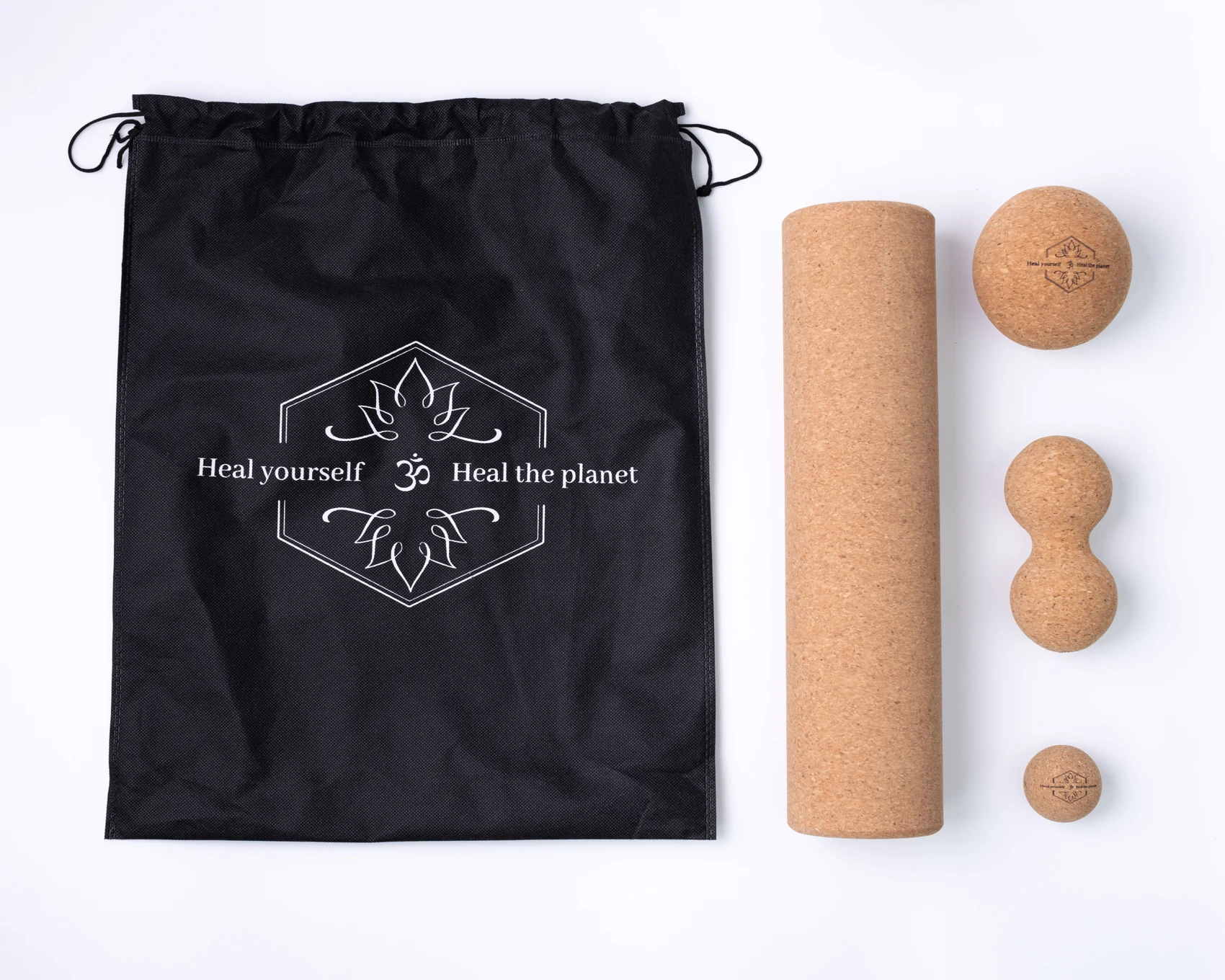
- The right tool. The roller is for large muscles – calves, thighs, glutes, upper back. A ball is for more precise work – feet, glutes, around the shoulder blades. A double ball is for the muscles along the spine, without pressing on the vertebrae.
- Where to be careful. Don’t roll directly over the lower back, the front of the neck, joints, bony prominences, varicose veins or fresh injuries.
If you prefer a natural material, Georgi Ranchev’s cork massage set includes a roller, a large and a small ball and a double ball, together with a guide to trigger-point self-massage with positions and sequences. For a broader understanding of why muscles tighten and how to balance them, see his book “Musculoskeletal Balance”.

Self-massage resources
When self-massage isn’t enough: therapeutic massage in Sofia
Self-massage maintains, but it doesn’t diagnose. See a therapist if:
- the pain doesn’t ease after 2–3 weeks of self-massage and movement;
- the pain spreads to the arm or leg, or there is numbness or weakness;
- the pain follows an injury or surgery, or appears at night and at rest;
- you can’t reach or relax the problem area yourself.
At Omni Health in Sofia (Reduta) we offer therapeutic massage, sports massage, deep tissue massage and physiotherapy after assessing the problem – not just “massaging the sore spot”. If needed, we also show you how to continue with self-massage at home so the effect lasts between visits.
How we can help
Time for action
Don’t delay – book an appointment now and take the path to full recovery!
Contact us by phone for a free consultation
Frequently asked questions
Which is better – massage or self-massage?
It depends on your goal. Self-massage is good for maintenance, mobility and muscle soreness; massage from a therapist is better for pain that won’t go away and for deep relaxation. The combination gives the best results.
How often should I do self-massage with a foam roller?
A few times a week, 1–2 minutes per muscle group. Before training, 30–60 seconds of self-massage per area is enough.
When is self-massage not enough?
When pain lasts more than 2–3 weeks, spreads to the arm or leg, or comes with numbness, weakness or night pain. Then you need a specialist assessment.
Sources
- Skinner B et al. Foam rolling: range of motion, recovery and athletic performance. J Bodyw Mov Ther, 2020.
- Konrad A et al. Static Stretch Training versus Foam Rolling Training Effects on Range of Motion. Sports Med, 2024.
- Wiewelhove T et al. A Meta-Analysis of the Effects of Foam Rolling on Performance and Recovery. Front Physiol, 2019.
- Foam Rolling or Percussive Massage for Muscle Recovery (DOMS). 2025.
- Mak S et al. Use of Massage Therapy for Pain, 2018–2023: A Systematic Review. JAMA Netw Open, 2024.
- Gross AR et al. Massage for neck pain. Cochrane Database Syst Rev, 2024.
- Foam Rolling Elicits Neuronal Relaxation Patterns Distinct from Manual Massage. Brain Sci, 2021.