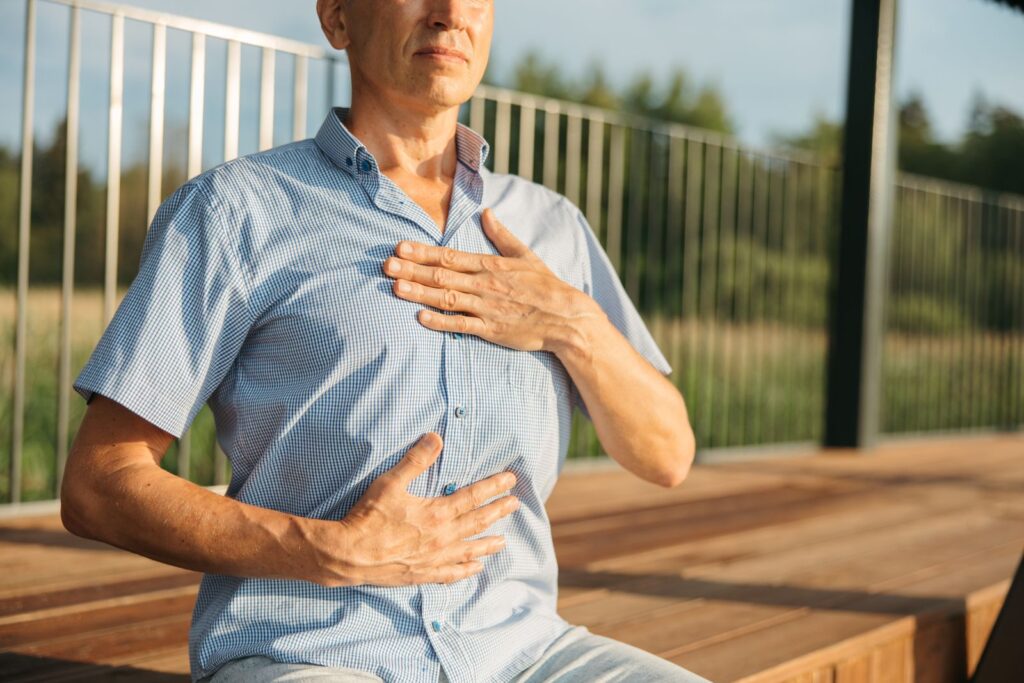
We breathe about 20,000 times a day and almost never think about how. In rehabilitation, however, breathing exercises are a tool: they stabilise the spine, influence the nervous system and pain perception, and in neurological patients breathing is often directly impaired.
The topic became popular with the book “Breath: The New Science of a Lost Art” (2020) by journalist James Nestor. Its main messages are three: breathe through your nose, breathe more slowly, and don’t breathe more than your body needs. Nestor describes a rhythm of about 5.5 seconds in and 5.5 seconds out – close to 5.5 breaths per minute.
The book is engaging, but it’s journalism, not a clinical manual. Below you’ll see where science confirms it and where more caution is needed.
Contents
Breathing exercises for low back pain: what the meta-analyses show
The diaphragm isn’t just a breathing muscle. Together with the transversus abdominis, the pelvic floor and multifidus, it creates the intra-abdominal pressure that stabilises the lumbar spine. When breathing is shallow and “upper chest”, this system works less well.
Evidence from recent years supports breathing exercises for chronic low back pain:
| Study | Size | Result |
|---|---|---|
| Chen et al., 2026, J Back Musculoskelet Rehabil | 17 studies, 633 people | Less pain and better function |
| Jiang et al., 2024, J Back Musculoskelet Rehabil | randomised trials | Significant reduction in pain and disability |
| Zhai et al., 2024, J Sport Rehabil | 14 studies, 698 people aged 60–80 | Best effect with resisted breathing for more than 4 weeks |
| Meta-analysis, PLOS ONE, 2026 | 31 studies | Moderate effect on pain, larger on function |
An important practical point: breathing works best as part of a programme – together with stabilisation exercises and movement, not instead of them. Most studies are small, so the real effect is probably more modest than individual trials suggest. That’s why in physiotherapy we combine it with stability and strength exercises.
Slow breathing, the nervous system and pain
Chronic pain isn’t only a tissue problem. The nervous system “amplifies” signals when it’s constantly on alert. Slow breathing is one of the few ways to consciously switch to the calming (parasympathetic) mode.
- A large meta-analysis of 223 studies (Laborde et al., 2022) shows that slow breathing increases heart rate variability (HRV) – a marker of vagus nerve activity. The effect is strongest during practice and fades afterwards, so regularity matters more than duration.
- The optimal rhythm for most adults is 4.5–6.5 breaths per minute (Appl Psychophysiol Biofeedback, 2024) – almost exactly the 5.5 breaths Nestor writes about in “Breath”.
- A 2025 review in Acta Neurologica Belgica (Giorgi & Tedeschi) also confirms improved baroreflex sensitivity with slow breathing.
Here the book and the science agree. Where Nestor goes further – for example, claims about treating serious diseases with breathing alone – the evidence is still lacking.
Breathing in neurological rehabilitation
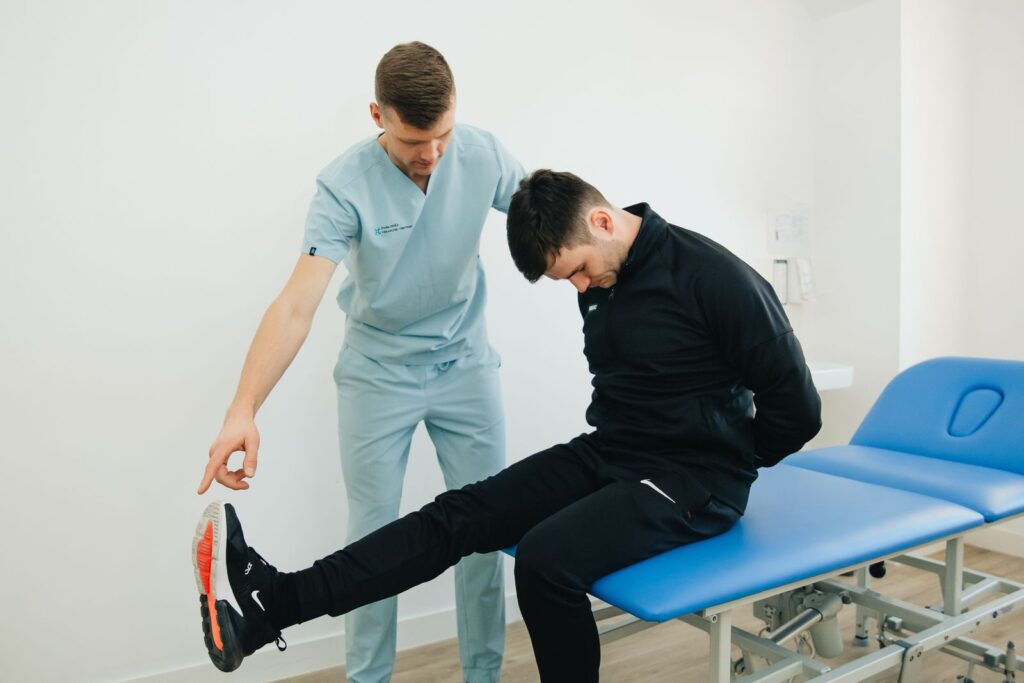
In neurological conditions the breathing muscles are often weakened like all the others. So here we’re talking not only about breathing technique but about respiratory muscle training – breathing in and out against a measured resistance with a device.
After stroke. Respiratory muscle strength after stroke is often less than half that of healthy people (World J Clin Cases, 2024). A meta-analysis in early stroke (up to 3 months) shows that training improves respiratory muscle strength, lung function and physical capacity – with combined inspiratory and expiratory training giving better recovery (Eur Rev Aging Phys Act, 2024). In chronic stroke, the effect on inspiratory strength and endurance is also confirmed (Front Physiol, 2025).
In Parkinson’s disease. A 2025 meta-analysis (Healthcare, 2025) shows that training increases expiratory strength and cough strength – important because a weak cough and difficulty swallowing are among the main risks of the disease.
For these patients the device and load are chosen individually after measurement, not from a generic internet protocol. This is part of our rehabilitation.
Three breathing exercises to start at home

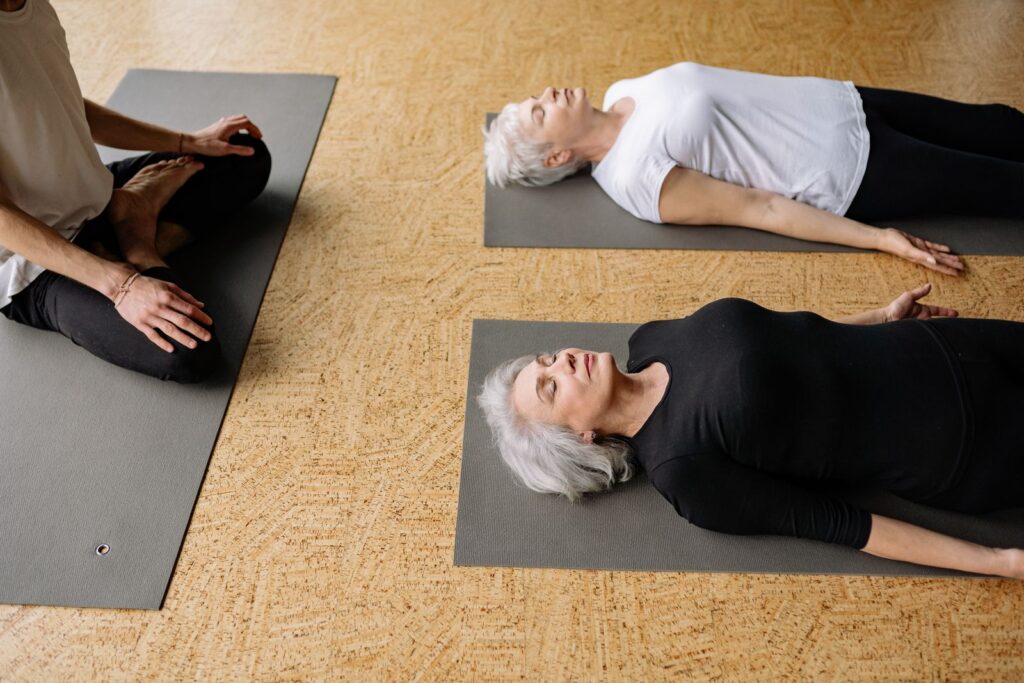
- Diaphragmatic breathing lying down. Lie on your back with your knees bent, one hand on your chest, the other on your belly. Breathe in through your nose so that mainly the hand on your belly rises – both forward and to the sides. Breathe out slowly through slightly parted lips. 5 minutes, once or twice a day.
- Slow nasal breathing – about 5–6 breaths per minute. In for 5 seconds, out for 5–6 seconds. It’s easiest to follow a visual rhythm – for example with the free breathing timer with ready-made protocols by ZHIVETE (in Bulgarian). Start with 5 minutes and build up to 10–15.
- Breathing in movement. Lying on your back with your legs in the air (“dead bug” position), breathe out calmly and feel your belly gently tighten. Hold that tension and slowly lower one arm and the opposite leg while you keep breathing. 2–3 sets of 6–8 reps per side. For sets and rests you can use the interval training timer by ZHIVETE.
A few rules: breathing should not make you dizzy; if it does, return to a normal rhythm. If you have heart, lung or neurological conditions, consult a doctor or physiotherapist first.
Useful breathing tools
When to see a physiotherapist
Home exercises are a good start, but see a specialist if:
- low back or neck pain lasts more than 6 weeks;
- you’ve had a stroke, have Parkinson’s or another neurological condition;
- you get short of breath with light effort, have a weak cough or difficulty swallowing;
- you can’t feel the difference between “upper chest” and diaphragmatic breathing.
If back pain comes with numbness, weakness or night pain, first read the 5 warning signs of back pain.
At Omni Health in Sofia we include breathing work in our back pain programmes and in neurological rehabilitation – with assessment of the breathing pattern, exercise selection and, when needed, respiratory muscle training.
How we can help
Time for action
Don’t delay – book an appointment now and take the path to full recovery!
Contact us by phone for a free consultation
Frequently asked questions
Do breathing exercises help low back pain?
Yes. Meta-analyses from 2024–2026 show less pain and better function, especially when breathing exercises are combined with stabilisation exercises and movement.
How long should I do breathing exercises each day?
Start with 5 minutes once or twice a day and build up to 10–15 minutes. Regularity matters more than duration.
Are breathing exercises safe after a stroke or with Parkinson’s?
Usually yes, but respiratory muscle training in neurological conditions should be dosed after measurement by a physiotherapist.
Sources
- Nestor J. Breath: The New Science of a Lost Art. Riverhead Books, 2020.
- Chen AY et al. Can breathing exercises effectively treat people with chronic non-specific low back pain? J Back Musculoskelet Rehabil, 2026.
- Jiang X et al. Effects of breathing exercises on chronic low back pain. J Back Musculoskelet Rehabil, 2024.
- Zhai H et al. The efficiency of respiratory exercises in rehabilitation of low back pain. J Sport Rehabil, 2024.
- Effects of breathing exercise and thoracic techniques on pain and disability in low back pain. PLOS ONE, 2026.
- Laborde S et al. Effects of voluntary slow breathing on heart rate and heart rate variability. Neurosci Biobehav Rev, 2022.
- Do longer exhalations increase HRV during slow-paced breathing? Appl Psychophysiol Biofeedback, 2024.
- Giorgi F, Tedeschi R. Breathe better, live better. Acta Neurol Belg, 2025.
- Effects of respiratory muscle training on post-stroke rehabilitation. World J Clin Cases, 2024.
- Respiratory muscle training in patients with early stroke. Eur Rev Aging Phys Act, 2024.
- Huang L et al. Respiratory muscle training in chronic stroke patients. Front Physiol, 2025.
- Respiratory muscle strength training in Parkinson’s disease. Healthcare, 2025.