
“Sit up straight or your back will hurt!” Most of us grew up hearing this. So when pain appears, the first suspect is bad posture and “muscle imbalance”. Science, however, paints a more complex – and more encouraging – picture. Back pain rarely has a single cause, and posture is usually not the main one.
Below you’ll see what research shows, when posture matters and what actually helps.
Contents
Does bad posture cause back pain?
- A large overview of 41 systematic reviews (over 4,000 publications) examined whether posture and physical load cause low back pain. The conclusion: associations appear in some studies, but there is no evidence that a particular posture causes pain (Swain et al., Journal of Biomechanics, 2020).
- A review of 54 studies found no strong link between spinal curves (lordosis, kyphosis) and pain (Christensen & Hartvigsen, 2008).
- Back pain researchers stress that there is no single “correct” posture. People with and without low back pain don’t differ meaningfully in how they sit and stand (O’Sullivan et al.).
This doesn’t mean posture is irrelevant. If you already have pain, some positions may aggravate it – and it’s worth trying others. But the solution is rarely just “sit up straight”.
What about forward head posture and neck pain?

For the neck the picture is a bit different. Studies show people with neck pain more often hold their head forward – although that doesn’t prove posture is the cause (Healthcare, 2023). A meta-analysis shows targeted exercise substantially changes head position and moderately reduces neck pain (Sheikhhoseini et al., 2018).
Interestingly, exercise helps not necessarily because it “fixes” posture, but because it makes the muscles stronger and more resilient and the body more confident in movement.
What “muscle imbalance” really means

By muscle imbalance we usually mean that some muscles are weaker, tighter or less enduring than others. This does happen, especially after injury, prolonged immobility or in neurological conditions. In those cases, work on strength and coordination is key.
In most people with ordinary back pain, however, asymmetries are normal variations. They’re not a “fault” to be fixed, just the way their body is built.
What actually helps
- Movement and changing position. The best posture is the next one. Change position every 30–45 minutes, get up, walk around.
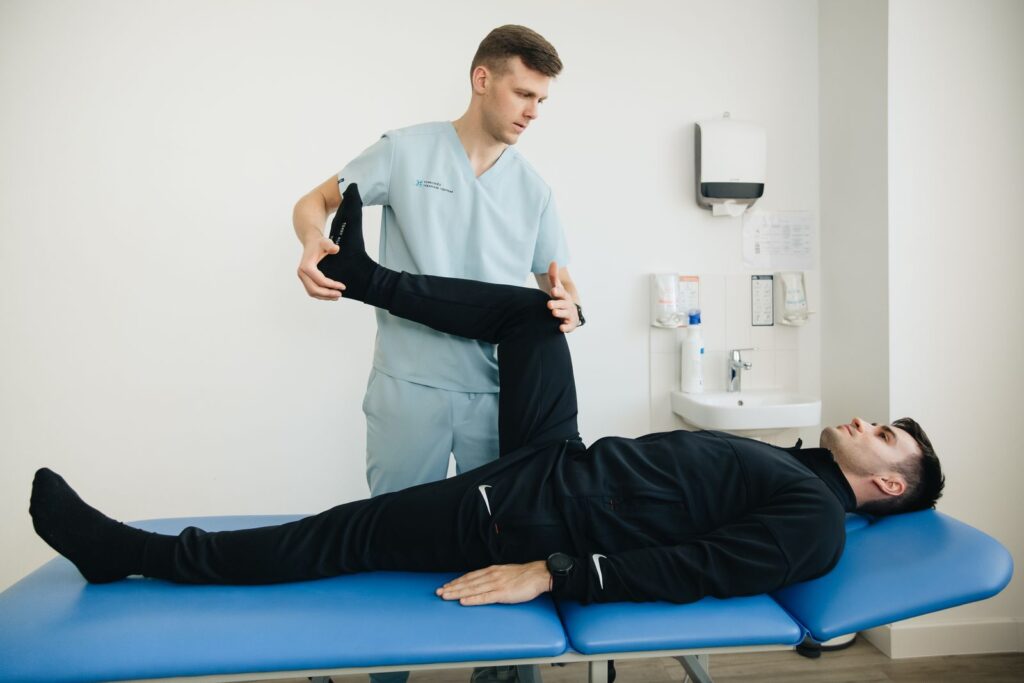
- Strength and endurance. Exercises for the back, glutes and neck make the body more resilient to load – the foundation of physiotherapy.
- Coordination. Balance and movement-control exercises help the nervous system manage the body better.
- Sleep, stress and activity. They affect pain no less than posture. See also our article on breathing exercises for low back pain.
- No fear of movement. The back is a strong structure. Bending and lifting are not dangerous in themselves – what’s risky is to stop moving out of fear.
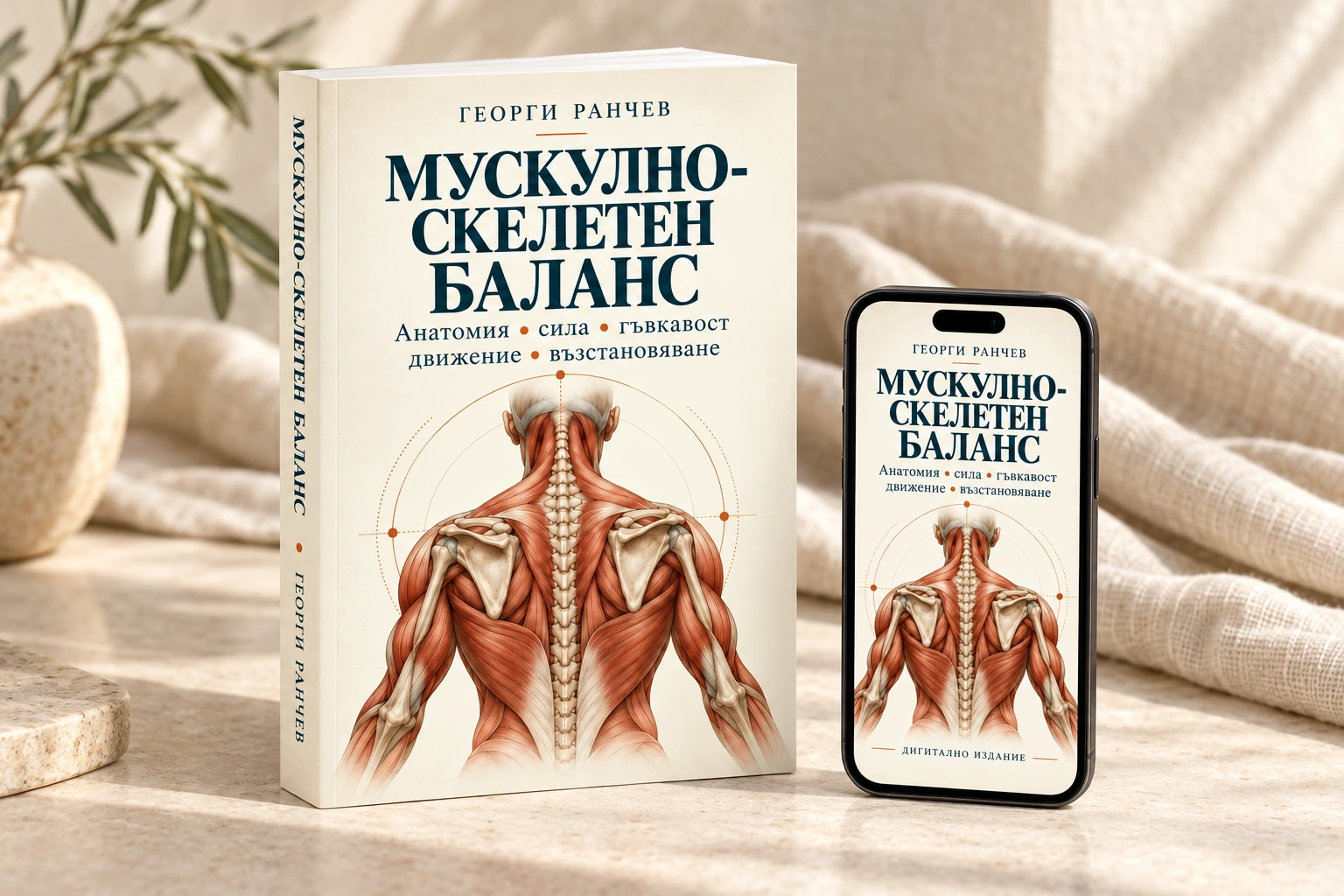
If you want a deeper understanding of how movement and muscles work together, the book “Musculoskeletal Balance” by Georgi Ranchev is written by a practitioner with experience in yoga, fitness and massage. And for releasing tight muscles at home – see our article massage or self-massage: what helps when.
Useful reading and practice
When to see a specialist
See a physiotherapist if back or neck pain lasts more than a few weeks, keeps coming back or interferes with work and sleep. See a doctor immediately if you have any of the warning signs of back pain.
At Omni Health in Sofia (Reduta) we don’t start with “fixing your posture” but with an assessment: where the pain comes from, what provokes it and what you can do. Then we build a plan with exercises for strength, mobility and coordination, and add therapeutic massage when needed.
How we can help
Time for action
Don’t delay – book an appointment now and take the path to full recovery!
Contact us by phone for a free consultation
Frequently asked questions
Does bad posture cause back pain?
Research has found no evidence that a particular posture causes back pain. Bad posture can aggravate existing pain, but it is rarely the main cause.
How do I fix bad posture?
Instead of looking for the “perfect” position, change position often, strengthen your back, glutes and neck and move regularly. That way bad posture stops being a problem.
Do posture correctors help?
There’s no good evidence that posture correctors reduce pain. Strength and mobility exercises are a better choice for bad posture.
Sources
- Swain CTV et al. No consensus on causality of spine postures or physical exposure and low back pain. J Biomech, 2020.
- Christensen ST, Hartvigsen J. Spinal curves and health: a systematic critical review, 2008 (summary).
- O’Sullivan P, Straker L, Saraceni N. Having good posture doesn’t prevent back pain, and bad posture doesn’t cause it.
- Treatment of Chronic Neck Pain in Patients with Forward Head Posture. Healthcare, 2023.
- Sheikhhoseini R et al. Effectiveness of therapeutic exercise on forward head posture. J Manipulative Physiol Ther, 2018.