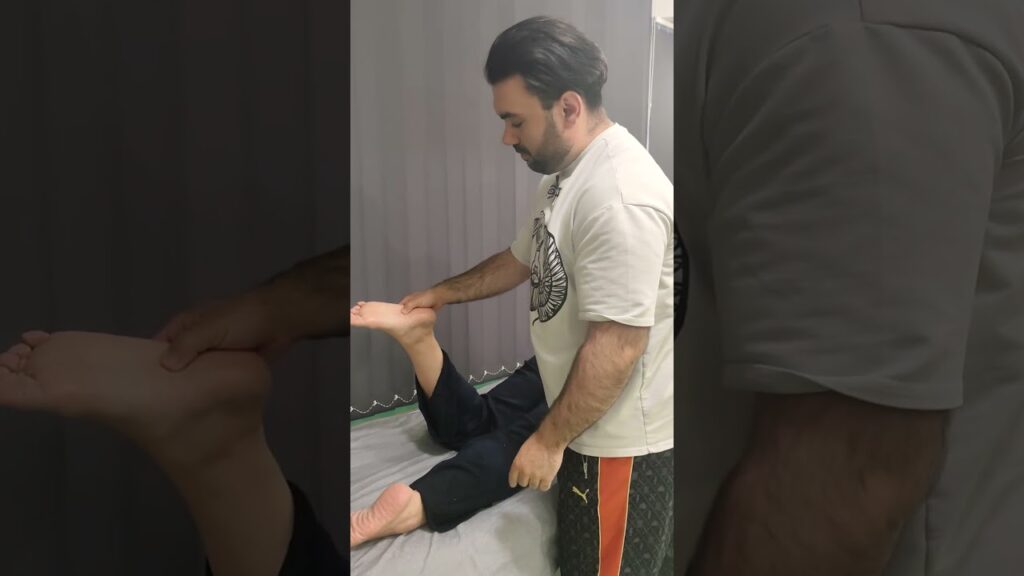
Foot pain after tripping: what happens
You step awkwardly off a kerb, trip on the stairs or fall – and the next day your foot is swollen, it hurts to stand on it, and your shoe suddenly feels tight. Most of these injuries are sprains or bruises and heal completely. But if they are not treated properly, the pain can linger for weeks and the ankle can start to “give way” again and again.

Table of contents
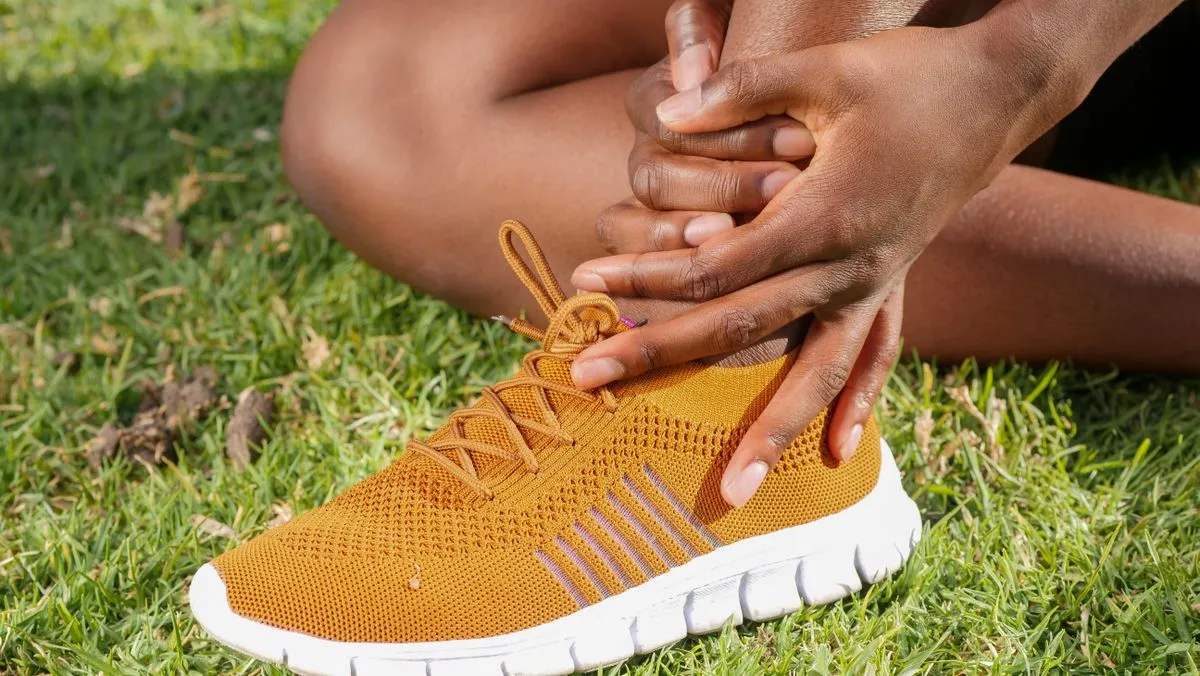
The most common causes of pain after tripping
- Ligament sprain – most often on the outside of the ankle, when the foot rolls inwards. There is swelling, bruising and pain when standing.
- Bruise – after a blow or a fall onto the foot. It hurts in one spot, but you can usually walk.
- Fracture of the midfoot bones – most often the base of the fifth metatarsal (the bone on the outer edge of the foot, towards the little toe).
- Tendon strain – for example of the tendons on the outside of the ankle that stabilise the foot.
When do you need an X-ray
Not every foot pain after a trip needs an X-ray. Doctors and physiotherapists use the Ottawa rules – a few simple questions that show when a fracture is possible. A foot X-ray is needed if there is pain in the midfoot and at least one of the following:
- tenderness when pressing the base of the fifth metatarsal (the outer edge of the foot)
- tenderness when pressing the navicular bone (the inner side of the midfoot)
- you cannot take 4 steps – neither right after the injury nor at the examination
The rules are extremely reliable. A systematic review in the BMJ with more than 15,500 patients showed they detect almost 100% of fractures, and a larger 2017 review (66 studies) confirmed a sensitivity of 99.4%. At the same time they cut unnecessary X-rays by 30–40%. In other words: if none of the signs are present, the chance of a fracture is very small.
What to do in the first days
- Protect it, but do not immobilise it completely. Walk as much as the pain allows. Long, complete rest slows recovery.
- Raise your leg when sitting or lying down – the swelling goes down faster.
- A cold compress for 10–15 minutes can ease the pain in the first days.
- An elastic bandage or brace gives support while the ligaments heal.
Rehabilitation: why it is not enough for the pain to go away
The most common mistake is to stop as soon as the pain settles. After a sprain, the ligaments and the “sensors” in them that tell the brain where the foot is recover more slowly than the pain itself. That is why the ankle stays unstable and sprains again.
A randomised trial in the BMJ with 522 athletes shows how much this matters. All received usual care, and half also did an 8-week balance programme at home. Within a year, 22% of the trained group re-sprained their ankle versus 33% of the others – a third fewer. For every 9 people who do the exercises, one new sprain is prevented.
Good rehabilitation includes three things:
- Mobility – restoring movement in the ankle and toes
- Strength – heel raises and exercises for the muscles on the outside of the lower leg
- Balance – standing on one leg, then with eyes closed or on an unstable surface
Balance exercises are not just for athletes – they protect against new injuries at any age.
When to see a doctor
- you cannot put weight on the foot
- the foot looks deformed
- the toes are numb, pale or cold
- the swelling and pain do not ease after 5–7 days
- the pain is getting worse instead of better
How we work at Omni Health
We start with an examination that includes the Ottawa rules – if a fracture is suspected, we refer you for an X-ray. For a sprain or bruise we combine manual therapy for swelling and mobility with gradual strength and balance exercises. You get a home programme and a clear plan for returning to walking, running or sport.
Frequently asked questions
Do I need an X-ray after tripping?
Only if there are signs of a possible fracture – pain when pressing specific points on the foot or being unable to take 4 steps. If these signs are absent, an X-ray is usually not needed.
How long does a foot sprain take to heal?
A mild sprain – about 2 to 4 weeks. A more severe one – 6 weeks or more. Balance exercises are best continued for at least 8 weeks to prevent it happening again.
When can I start running again?
When you walk without pain, can stand on one leg for at least 30 seconds and hop on the spot without pain. The return to running is gradual.
Should I wear a brace?
A brace or elastic bandage gives support in the first weeks and when returning to sport. It does not replace strength and balance exercises.
How we can help
An examination, a recovery plan and exercises that lower the risk of the injury happening again.
Time for action
Don’t delay – book an appointment now and take the path to full recovery!
Contact us by phone for a free consultation
This article is for information only and does not replace a medical examination.
References:
Bachmann et al., BMJ 2003 – Accuracy of Ottawa ankle rules to exclude fractures of the ankle and mid-foot
Beckenkamp et al., Br J Sports Med 2017 – Diagnostic accuracy of the Ottawa Ankle and Midfoot Rules
Hupperets et al., BMJ 2009 – Home based proprioceptive training and recurrences of ankle sprain