The benefits of lymphatic drainage in short
Lymphatic drainage is one of the gentlest, yet most specific manual techniques. It does not “knead” the muscles – with slow, rhythmic movements it helps the lymph to drain. That is why the benefits of lymphatic drainage are felt both with medical problems of the lymphatic system and by people who simply feel swollen and heavy.
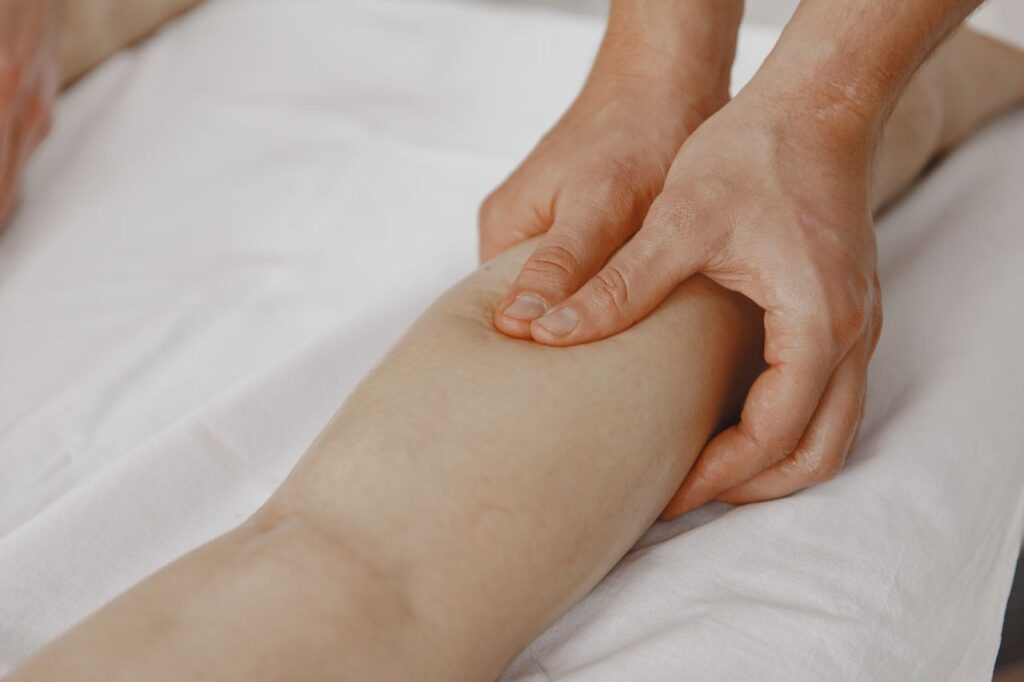
Table of Contents
What is manual lymphatic drainage?
The lymphatic system collects excess fluid from the tissues and returns it to the bloodstream. It has no “pump” of its own like the heart – it relies on movement, breathing and the muscles. When drainage slows down, fluid is retained and swelling, heaviness and tension appear.
Manual lymphatic drainage uses very light pressure and a precise direction of movement towards the lymph nodes. Each session starts by preparing the neck and abdomen to “open the way” for the lymph, and only then does the therapist work on the affected area. There are several leading schools, including the Földi, Leduc and Belgrado methods. All of them aim at the same benefits of lymphatic drainage – less swelling and healthier tissues.
What medical problems is it used for?
- Lymphedema – primary or secondary, for example after surgery and removal of lymph nodes for breast cancer
- Swelling after surgery and injuries – after joint replacement, fractures, sprains
- Lipedema – as part of comprehensive care
- Chronic venous insufficiency – after a doctor’s approval
With lymphedema, lymphatic drainage is part of complete decongestive therapy: drainage, compression bandaging, exercises and skin care. It is the bandaging that keeps the result between sessions – without it the benefits of lymphatic drainage for lymphedema are short-lived.

The benefits of lymphatic drainage if you have no condition
Many people who come for lymphatic drainage have no problem with the lymphatic system. For them it is mild congestion, not a disease. The aim here is not treatment but feeling better and lighter:
- heavy, swollen legs after a long day on your feet or at a desk
- fluid retention after a flight or a long journey
- a puffy face in the morning
- faster recovery after exercise and sport
- as a complement to anti-cellulite treatments
- deep relaxation – the rhythm of the drainage calms the nervous system
To be honest, in healthy people the benefits of lymphatic drainage are more a feeling of lightness and less swelling for a while, not a permanent change. That is why, for a visible result, we recommend a course of several sessions combined with movement and enough water.
When is lymphatic drainage not done?
The benefits of lymphatic drainage are great, but there are conditions in which the treatment should be postponed or agreed with a doctor first:
- an acute infection, fever or skin inflammation (erysipelas)
- recent deep vein thrombosis
- decompensated heart or kidney failure
- active cancer – only with permission from the treating oncologist
How long does a session take and how much does it cost?
- 30 minutes – one area: face and neck, arms, abdomen and waist, back or one leg – €30
- 60 minutes – two areas, for example legs and abdomen – €50
- 90 minutes – full body – €70
What happens at the first session
The first visit starts with a short conversation: what bothers you, how long you have had the swelling, and whether there are operations, conditions or medication we should know about. With lymphedema, bring your discharge summary and test results. The therapist then examines and measures the area so the result can be tracked.
The session itself is calm and painless. You lie comfortably while the therapist works with light, rhythmic pressure – first on the neck and abdomen, then on the affected area. Many people relax so much that they fall asleep – this is also one of the benefits of lymphatic drainage, because its rhythm calms the nervous system. After the session, drink water and take a short walk.
How many sessions are needed
With mild congestion and heavy legs, the lightness is often felt after the very first session. For longer-lasting benefits of lymphatic drainage, we recommend a course of several sessions – usually between 5 and 10, two or three times a week. With lymphedema, the number of sessions and the bandaging are set individually according to the stage and the treating doctor’s advice.
Frequently asked questions
Does lymphatic drainage hurt?
No. It uses very light, rhythmic pressure – lighter than a normal massage. Most people find it very relaxing.
How often can I have lymphatic drainage?
With mild congestion – once or twice a week, or as a course of several sessions. With lymphedema, the frequency is set by the therapist according to the stage and the doctor’s advice.
Does lymphatic drainage help with weight loss?
Lymphatic drainage does not burn fat. It reduces retained fluid and swelling, so the body looks and feels lighter. For a visible result, combine it with movement and a healthy diet.
Can I have lymphatic drainage during pregnancy?
Only after talking to your doctor. Tell us about the pregnancy when you book, so we can decide whether the treatment is suitable and how to adapt it.
Lymphatic drainage at Omni Health
At Omni Health, lymphatic drainage is performed by Krasimir Ignatov – a rehabilitator who graduated from the Medical University of Sofia, with over 20 years of international experience in massage. He is trained in several leading methods of manual lymphatic drainage and in compression bandaging, and works both with lymphedema patients and with people who have mild congestion without a condition. You will find prices and free appointments on the Lymphatic drainage page. See also all our massages.
How we can help
You can feel the benefits of lymphatic drainage too – we work with lymphedema and swelling after surgery, as well as with mild congestion and heavy legs.
Time for action
Don’t delay – book an appointment now and take the path to full recovery!
Contact us by phone for a free consultation
References:
A systematic review of the evidence for complete decongestive therapy in the treatment of lymphedema